
Rail Rover
The Rail Rover is an advanced ultrasonic inspection system designed specifically for the maintenance and safety of railroad tracks. It combines portability, advanced technology, and ease of use to perform accurate inspections, efficiently detecting internal defects under a variety of operating conditions.
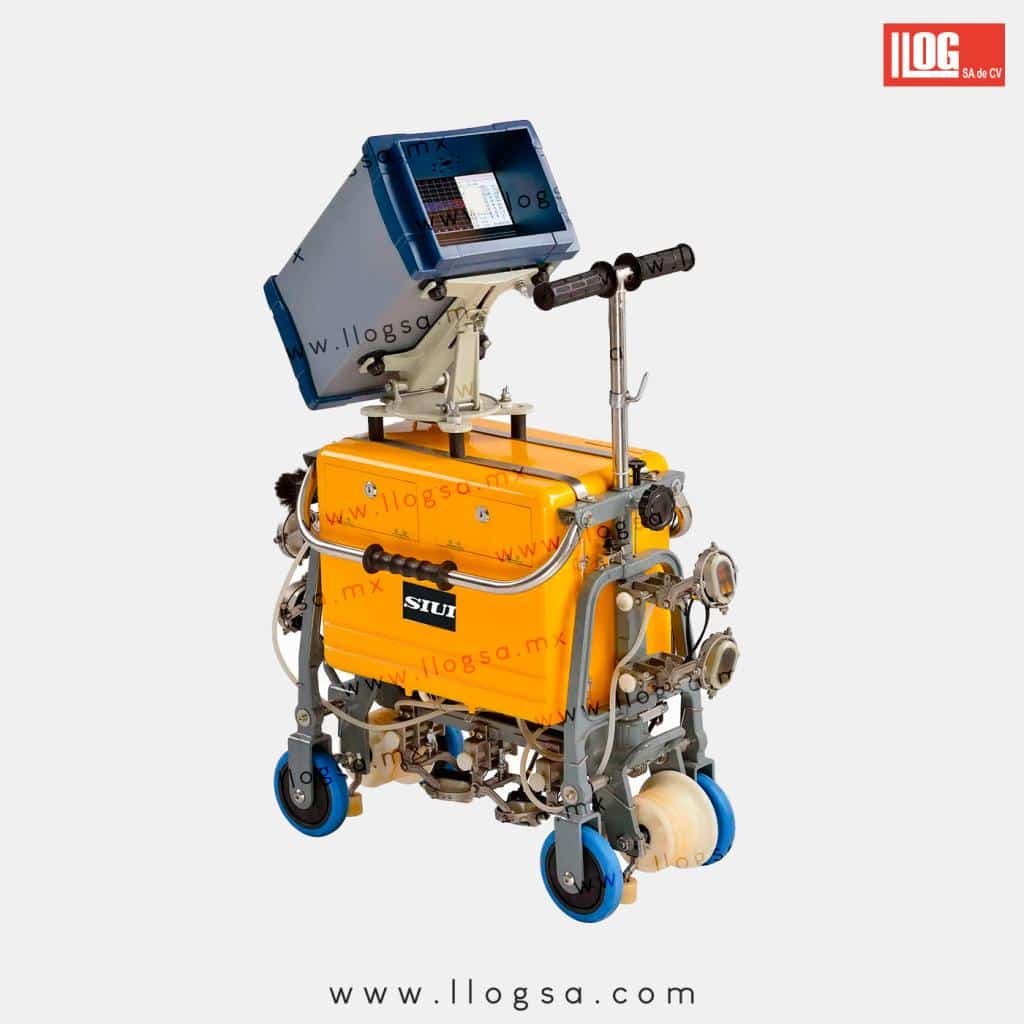
Technical Specifications
- Advanced ultrasound technology:
- Uses multichannel ultrasonic transducers with angled and straight-beam technology for complete coverage of the rail.
- Compatible with multiple operating frequencies to accommodate different depths and types of defects.
- High resolution in the detection of internal discontinuities, such as transverse cracks, longitudinal defects, and defective welds.
- Portable and ergonomic design:
- Lightweight, foldable frame for easy transport and handling.
- Sturdy, adjustable wheels to accommodate various track widths and ensure stability during scanning.
- Modular system for quick setup in the field.
- Display and Analysis Software:
- High-definition display for clear data visualization, even in direct sunlight.
- Intuitive graphical interface that allows for real-time adjustments.
- Integrated software for data storage and analysis, with the ability to export detailed reports.
- Support for A-scan, B-scan, and C-scan, providing multiple inspection perspectives.
- Connectivity and Storage:
- Large internal storage capacity, with the option to export data to a USB drive.
- Wi-Fi and Bluetooth connectivity for data transfer and remote updates.
- Compatible with GPS systems for geolocation of detected defects.
- Strength and Durability:
- Designed to operate in harsh conditions: extreme temperatures, humidity, and dust.
- Shock- and vibration-resistant construction, ensuring reliable performance in the field.
Advantages
- High precision and reliability:
- Enables early detection of defects that might go unnoticed with traditional methods.
- It reduces the risk of rail failures through regular and detailed inspections.
- Ease of use:
- No extensive training is required, thanks to its user-friendly interface.
- Quick setup and efficient operation, saving time in the field.
- Operational efficiency:
- Quick inspection of long stretches of track in a short period of time.
- Significantly reduces rail track downtime by identifying problems proactively.
- Adaptability:
- Compatible with standard rails, welded rails, and various types of steel.
- It adapts to different track configurations and types of rail transport.
- Generation of detailed reports:
- Records and stores comprehensive data for later analysis and historical tracking.
- Facilitates decision-making based on solid evidence.
Technology and Operating Principles
- Pulse-echo ultrasonic testing:
- It sends ultrasonic pulses into the material and analyzes the echoes reflected by internal discontinuities.
- A highly effective method for detecting cracks, porosity, and defective joints.
- Phased-array technology (optional):
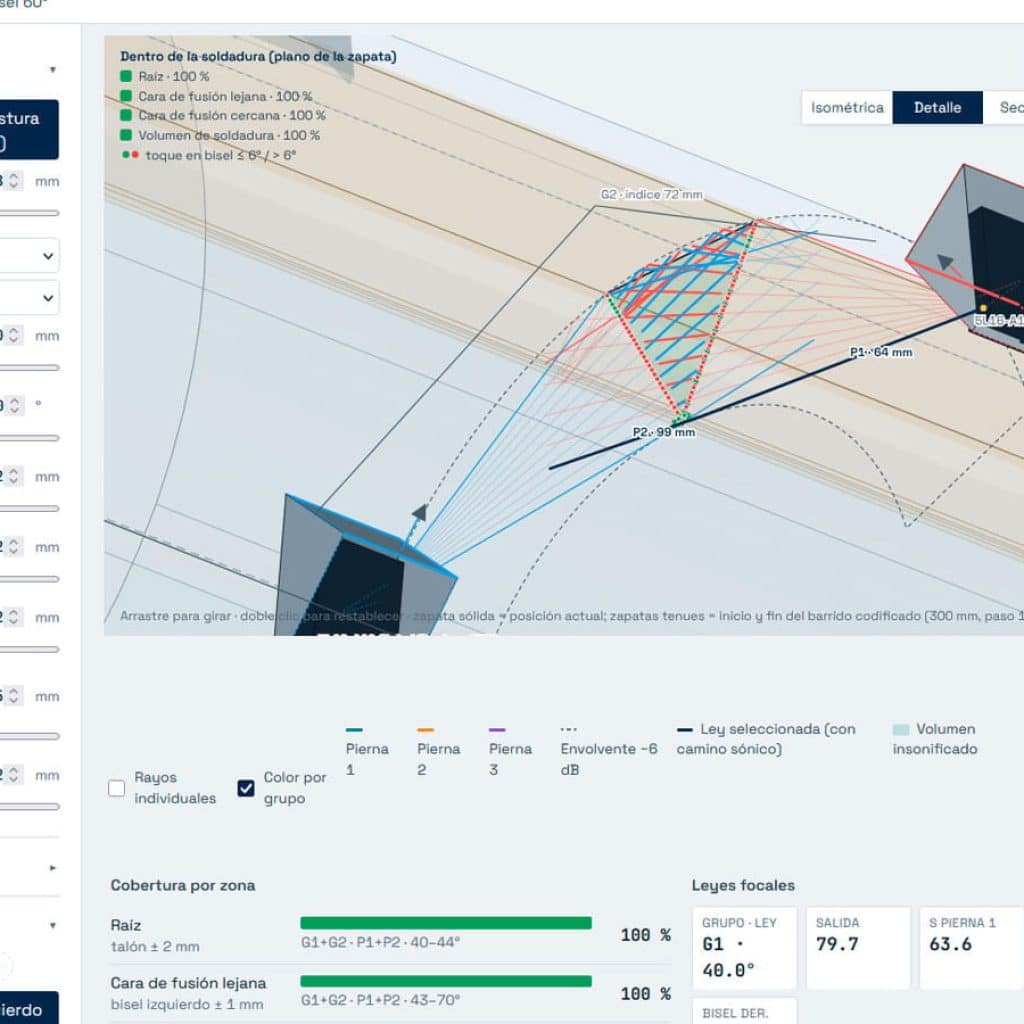
- Uses multiple electronically controlled ultrasonic beams for a more detailed and versatile scan.
- Improves detection capabilities in welds and complex areas of the rail.
- GPS integration:
- Allows specific defect locations to be marked to facilitate repairs.
- Real-time analysis:
- High-performance processors that generate instant results, preventing delays in diagnosis.
Typical Applications
- Preventive inspection: Identifying defects before they become critical problems.
- Weld inspection: Evaluation of the quality of welded joints on rails.
- Predictive maintenance: Data-driven planning to minimize disruptions.
- Quality control: Verification of new or repaired rails.
| Brand | SIUI |
|---|---|
| Method | Ultrasonic Testing |
 Oil and gas
 Power generation
 Steel structures
 Aerospace
 Pressure vessels

You may also be interested in
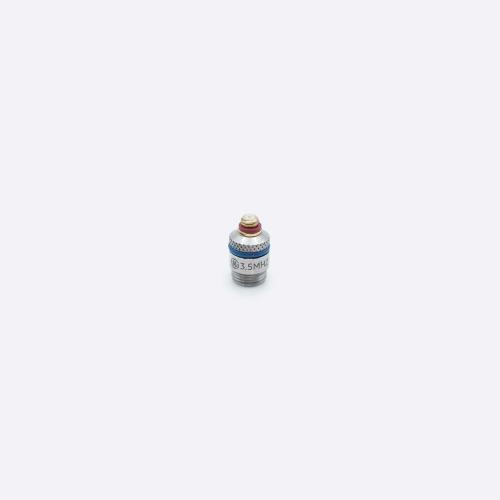 223 591Miniature Angular Beam Transducer, MSW-QC type, 3.5 MHz, 0.250…
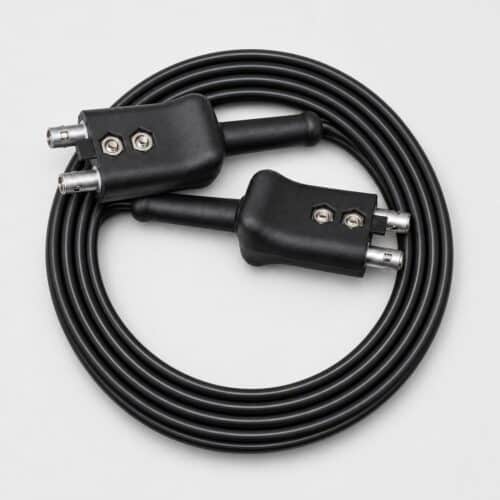 KBA533LDual cable with Lemo 00 to Lemo 00 connectors.
 222 591Miniature Angular Beam Transducer, MSW-QC type, 2.25 MHz, 0.250…
 246 590Miniature Angular Beam Transducer, MSW-QC type, 10 MHz, 0.500…
 223 590Miniature Angular Beam Transducer, MSW-QC type, 3.5 MHz, .250…
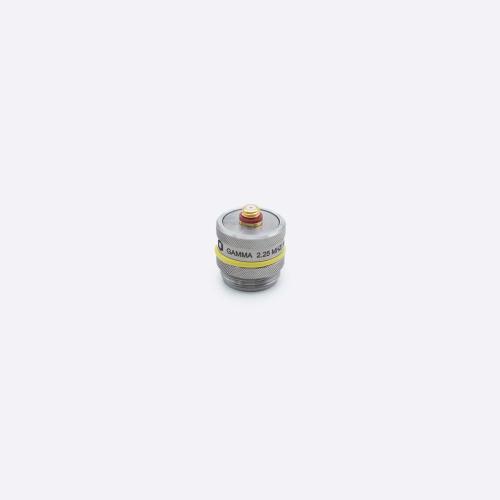 242 590Miniature Angular Beam Transducer—MSW type—2.25 MHz, .500 in diameter,…
 229-590113-229-590
 231 590Miniature Angular Beam Transducer, MSW-QC type, 1.5 MHz, 0.375…